 Українська
News
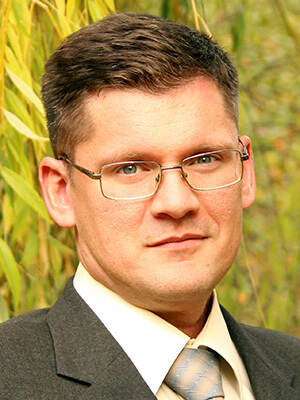
A Master’s graduate with honours and an active member of the cybersecurity community – that’s our graduate Vladislav Momot (specialism 125 “Cybersecurity and Information Protection”)
Vladislav Momot successfully completed his Master’s degree at Kharkiv National University of Radio Electronics, specialising in 125 “Cybersecurity and Information Protection” at the V.V. Popovsky Department of Information and Communication Engineering, Faculty of Cybersecurity. He received his Master’s degree in the “Administrative Management in the Field of Information Protection” programme with distinction; however, he believes that it was not his grades but the opportunities opened up by his university studies that proved most valuable.
“For me, university is, first and foremost, an environment of opportunities. It is important not to wait for them to appear of their own accord, but to make the most of each one and start even with small steps. It is these that, over time, lead to significant results.”
From the very first months of his undergraduate studies, Vladyslav Momot sought to make the most of opportunities for professional development. In addition to the core curriculum, he regularly took part in international study programmes, webinars, academic conferences, round-table discussions, professional courses and other events. During his studies, he took part in dozens of such events and obtained over 20 certificates confirming the competences he had acquired in the fields of cybersecurity, network technologies, cloud services and related areas.
One of the opportunities that had a significant impact on my subsequent career path and sparked my interest in cybersecurity was taking part in the international DigiJED programme. Whilst taking the “Creating Mobile Apps with Android” course, I came up with the idea of creating my own Android app, “EDKI. Cybersecurity”, to help students prepare for the Unified State Qualification Examination in their chosen specialism. Working on the app provided not only practical programming experience but also the opportunity to independently design, develop and refine my own cybersecurity-related software product.
The next step was to enrol on the “Machine Learning with Python” course, which opened up a new area of professional interest. It was then that the desire arose to combine machine learning—in particular, programming in Python—with cybersecurity, which later became one of the key factors in choosing the topic for my Master’s research.
My Master’s thesis was entitled “Research into the effectiveness of machine learning methods for detecting botnets that use the fast-flux IP address technique”. As part of the research, a comparative analysis was carried out of logistic regression models, isolated forest models and two variations of hybrid models for detecting fast-flux domains. The thesis enabled the author to combine knowledge of data analysis, network security and modern machine learning algorithms to address pressing issues in cyber defence and the countering of cyber threats.
Throughout his studies, Vladislav Momot was actively involved in research and authored or co-authored three academic publications focusing on the analysis of Russian cyber-attackers’ activities, countering transport-layer attacks, and the application of adaptive routing in SD-WAN whilst taking network security metrics into account. The research findings were presented at international scientific and technical conferences and at the international youth forum “Radio Electronics and Youth in the 21st Century”. Participating in conferences and preparing academic publications enabled him not only to deepen his knowledge but also to gain experience in conducting research and presenting its results at academic events.
At the same time, his professional development was not limited to academic activities: to consolidate and test his skills, Vladyslav Momot regularly took part in Capture The Flag competitions. Over the course of his studies, he managed to secure three podium finishes: 5th place at the Ukrainian Esports Championship in the CTF-Cybersecurity 2025 discipline as part of the “0x57” team, 4th place at the Kharkiv Regional CTF v2.0 as part of the “POTUZHNI” team, and 3rd place at the Kharkiv Regional CTF as part of the “$up3rm1nd5” team. The student also took part in the ICE Capture The Flag competition.
Taking part in CTF competitions enabled him to apply his theoretical knowledge in practice, hone his skills in vulnerability analysis, cryptography, digital forensics, web security and exploiting software bugs, and gain experience of teamwork whilst solving complex technical problems.
At the same time, Vladislav Momot systematically enhanced his skills through international educational platforms. He successfully completed the AWS Cloud Security Foundations course on the AWS Academy platform, as well as the Cyber Threat Management, CyberOps Associate, Ethical Hacker, Junior Cybersecurity Analyst Career Path, Network Defence, PCAP: Programming Essentials in Python, CCNA: Introduction to Networks, CCNA: Switching, Routing and Wireless Essentials on the Cisco Networking Academy platform, modules on the RangeForce platform, and the "EU Best Practices for Trustworthy and Reliable AI" course as part of the Erasmus+ Jean Monnet project.
Thanks to the courses and academic modules I undertook at university, I have gained a thorough understanding of ethical hacking, penetration testing, the use of Kali Linux tools, web application security, network traffic analysis, digital forensics, cyber incident response, network infrastructure administration, international standards and best practices in information security, programming in Python, and the application of machine learning methods to solve contemporary cybersecurity challenges.
The knowledge and skills acquired whilst studying at university are already being put to use in my professional life. They are utilised when working with regulatory and legal documents in the field of cybersecurity, developing information security policies, organising training sessions and exercises, raising awareness, configuring network infrastructure, utilising specialised software tools, providing consultancy on cyber defence, configuring network equipment and tackling other practical tasks related to ensuring cyber defence.
According to the graduate, even with the remote learning format, the university provided ample opportunities for developing both fundamental theoretical knowledge and professional skills.
“Even in a remote learning environment, students can take part in international programmes, undertake certification courses, engage in research, develop their own projects and test their skills in e-sports competitions. The most important thing is to actively seek out and make the most of opportunities. It is perseverance, continuous self-study and the desire to develop that enable students to achieve excellent results, regardless of the circumstances.”


Ця активність відповідає наступним цілям сталого розвитку: